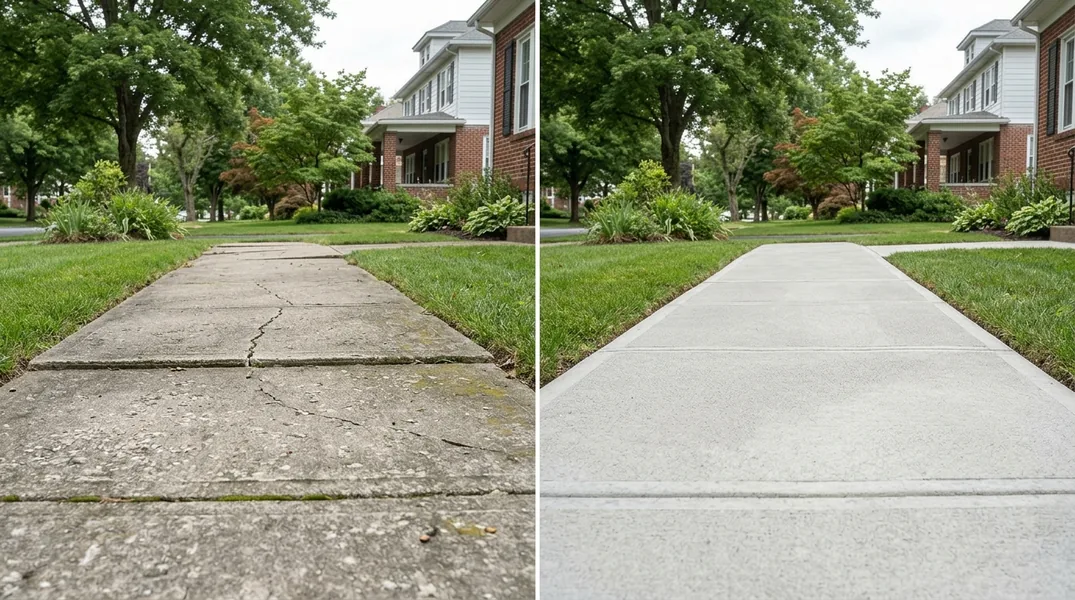
The Limestone Problem Beneath Your Feet
If you own property in Allentown, you're likely aware that the Lehigh Valley sits atop a geological foundation unlike many other regions in Pennsylvania. The bedrock beneath our community is predominantly limestone, a soluble rock that dissolves slowly when exposed to acidic groundwater. This natural process creates underground voids and cavities over decades, and when those voids collapse, the result is a sinkhole that can swallow your driveway, patio, or worse.
Limestone sinkholes aren't unique to our area, but they're particularly common in the Lehigh Valley because of the specific combination of our geology and water table. When groundwater percolates through the limestone, it gradually enlarges tiny fractures and passages. The overlying soil and concrete eventually lose support, and sudden collapse can occur with little warning. Homeowners often discover the problem only after noticing a depression, crack, or sudden drop in their Concrete Driveways. The financial and structural consequences can be severe, which is why understanding this risk is essential for every property owner in the region.
Frost Heave and Winter's Assault on Concrete
Pennsylvania winters are unforgiving, and the Lehigh Valley experiences some of the harshest freeze-thaw cycles in the state. Frost heave occurs when water in the soil beneath your concrete expands as it freezes, pushing upward with tremendous force. Over multiple winter seasons, this repeated expansion and contraction causes concrete to crack, buckle, and shift. What starts as a hairline fracture in January can become a major structural problem by spring, and the damage compounds year after year.
The problem is especially pronounced in Allentown because our soil composition amplifies frost heave damage. Clay-rich soils, common throughout the Lehigh Valley, retain moisture exceptionally well. When that moisture freezes, the expansive force is greater than in sandy or well-draining soils. Concrete that was poured without proper base preparation or drainage can experience heaving that lifts one section several inches higher than an adjacent section, creating a tripping hazard and an eyesore. Professional Concrete Repair & Resurfacing services become necessary to restore safety and appearance, but prevention through proper installation is always preferable.
Soil Composition and Settlement Issues
The Lehigh Valley's soil isn't just challenging because of limestone and frost. The region's complex geological history has left behind a patchwork of clay, silt, sand, and shale deposits that vary significantly from one property to another. Some areas have dense, compacted clay that resists water drainage and promotes pooling, while others have looser, more unstable soil that settles unevenly over time. This variability means that two driveways on the same street can respond very differently to weather and seasonal changes.
Settlement is the gradual sinking or shifting of soil beneath a concrete surface. Unlike sudden sinkhole collapse, settlement is often slow and subtle, but its effects are just as damaging. As soil compacts, shifts, or erodes, the concrete above loses support and begins to crack and sink. Differential settlement, where one section of concrete drops more than an adjacent section, creates the uneven surfaces and lip edges that plague many older driveways in the region. Proper site preparation, including soil testing and adequate base layers, is critical during initial installation. If your driveway is already showing signs of settlement, contact Allentown Concrete Pros for a free estimate to discuss repair options.
How Groundwater Movement Accelerates Concrete Damage
Groundwater isn't static. It moves through soil in response to topography, seasonal changes, and localized conditions. In the Lehigh Valley, groundwater flow patterns are influenced by the limestone bedrock and the region's varying elevations. When groundwater moves beneath a concrete surface, it can carry away fine soil particles in a process called erosion or piping. Over time, this creates voids beneath the concrete, reducing support and leading to cracking and settling.
Additionally, groundwater carrying slightly acidic rainwater can attack concrete directly, especially if the concrete was improperly finished or has existing cracks. The acid slowly dissolves the cement binder that holds the concrete together, weakening it from within. Homeowners in the Lehigh Valley should ensure that their driveways and Concrete Patios have proper slope and drainage to direct water away from the structure. A well-designed drainage system, combined with quality concrete and proper sealing, can significantly extend the lifespan of your investment and reduce the risk of costly repairs.
Protecting Your Concrete in Lehigh Valley Conditions
Understanding the geological and climatic challenges of the Lehigh Valley is the first step toward protecting your concrete investment. Proper installation is paramount. This includes thorough site preparation, removal of unsuitable soil, installation of a compacted base layer (typically four to six inches of crushed stone), and attention to drainage. The concrete itself should be air-entrained to resist freeze-thaw damage and should be finished with a proper slope to shed water. Sealing your concrete every two to three years provides an additional barrier against water infiltration and chemical attack.
If you're planning a new Concrete Driveways project or considering Stamped & Decorative Concrete for your home, it's essential to work with a contractor who understands local soil conditions and weather patterns. At Allentown Concrete Pros, we've installed and repaired countless concrete surfaces throughout the region and know exactly what it takes to build structures that withstand our challenging environment. We can assess your property's specific conditions and recommend solutions tailored to your situation.
When to Call a Professional for Concrete Repair Near Me
If you've noticed cracks, uneven sections, or depressions in your driveway, don't wait. Early intervention can prevent minor problems from becoming major expenses. Signs that your concrete needs professional attention include hairline cracks that grow wider each season, sections that have heaved or settled relative to adjacent areas, spalling or flaking at the surface, and any signs of sinkhole activity such as circular depressions or sudden drops.
Allentown Concrete Pros offers comprehensive Concrete Repair & Resurfacing services designed to address the specific challenges posed by our region's geology and climate. Whether your concrete needs patching, mudjacking to correct settlement, or complete resurfacing, our team has the expertise and equipment to restore your driveway safely and effectively. Call us today at (610) 439-9742 or visit our website to schedule your free consultation and learn more about our pricing options.
Looking for a professional concrete contractor in Allentown? Allentown Concrete Pros responds fast for all your concrete needs.
Get a Free QuoteOur services: Concrete Driveways · Concrete Patios · Stamped & Decorative Concrete